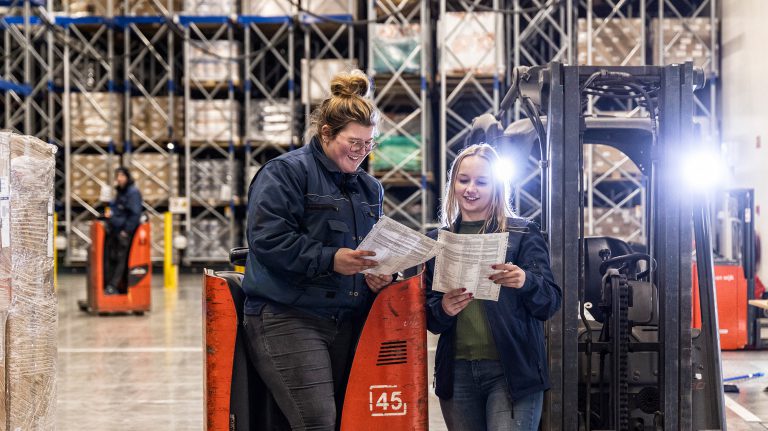
Fulfilment is a important part of modern logistics, especially as customers increasingly expect fast and error-free deliveries. In this blog, we explain what fulfilment is, how it works, the benefits it offers, the costs you can expect, and when it makes sense to outsource fulfilment to a logistics partner such as E. van Wijk Logistics.
customs douane

What is fulfilment?

Fulfilment refers to the complete order processing cycle: from storing products, handling orders, and packing goods, to shipping them to the customer and managing returns.

There is also a distinction with e-fulfilment: this specifically focuses on processing online orders from webshops and marketplaces. Whereas traditional fulfilment can also involve large B2B orders, e-fulfilment emphasizes fast, often smaller deliveries to consumers.

Fulfilment is a crucial link in your supply chain. It optimizes order lead times and ensures that your customer receives the right products on time.

How does fulfilment work in practice?

The process begins the moment an order is placed. Orders are automatically imported into the fulfilment system, after which products are picked, packed, and shipped to the customer.

In addition to shipping, fulfilment also includes inventory management (real-time insight into stock levels) and returns processing (checking, repacking, or restocking returned items).

With smart integrations between your webshop, ERP system, or sales channels, this process runs fully automatically. This saves time, minimizes errors, and enables lightning-fast order processing.

The benefits of fulfilment for your business

Outsourcing fulfilment offers both operational and financial advantages:

  • Greater scalability and lower fixed costs – No investments in warehouse space, staff, or systems; you only pay for what you use.

  • Faster delivery and higher customer satisfaction – Professional processes ensure short lead times and happy customers.

  • Time savings – Your internal team can focus on sales, marketing and product development, while we handle the logistics.

For many businesses, fulfilment is the smart way to grow efficiently without major investments.

What does fulfilment cost?

Costs typically consist of three components:

  • Storage costs – Usually per pallet, pick location, or cubic meter.

  • Order processing costs – For picking, packing, and labeling orders.

  • Shipping costs – Depending on weight, size, and destination.

Factors such as order volume, product dimensions, shipping method, required storage space, and any additional services (e.g., custom packaging or quality checks) all influence your final fulfilment rate.

When is fulfilment the right choice?

Fulfilment is especially attractive when your order volume is growing, when you serve customers across the Netherlands or internationally, or when fast delivery is a competitive advantage.

It is suitable for both B2B and B2C: while the approach differs, outsourcing can reduce costs and increase efficiency in both cases.

Managing fulfilment in-house gives you maximum control but requires time, space, staff, and investments. Outsourcing, on the other hand, provides flexibility, scalability, and immediate access to logistics expertise and advanced systems.

Fulfilment at E. van Wijk Logistics

At E. van Wijk Logistics, we work with a scalable and transparent model where you only pay for what you use. Our processes are clear, flexible, and fully tailored to your needs.

We seamlessly integrate with your webshop, ERP, or marketplaces, ensuring that orders are processed automatically and error-free. Whether it’s standard storage, custom packaging, or special handling, we provide tailor-made fulfilment solutions.

Choose convenience, speed, and growth

Would you like to learn more about fulfilment and whether it’s the right solution for your business? Contact E. van Wijk Logistics for a free fulfilment consultation. Together, we will ensure that your logistics are ready for the next step in your growth journey.
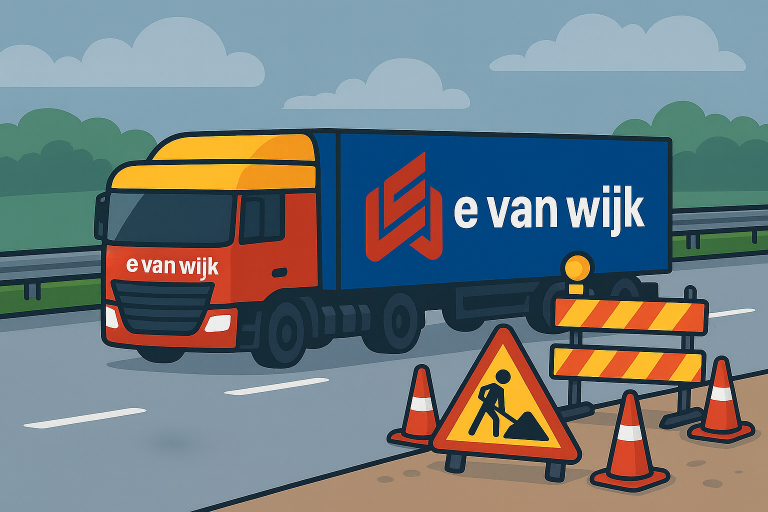
In 2025, large-scale roadworks are planned on key Dutch highways. For businesses that rely on reliable logistics, these projects may directly impact delivery times and accessibility. At E. van Wijk Logistics, we take proactive measures to minimize disruptions to your shipments.

Roadworks 2025: what’s on the agenda?

The roadworks on the A27, A12 and A58 are among the most impactful projects of the year. Various sections will undergo asphalt renovations, bridge replacements and lane expansions. This will lead to narrowed lanes and temporary closures, often during peak hours, weekends or nights. As a result, traffic congestion will increase and certain regions – such as Utrecht, Arnhem, Breda and Zeeland – will become less accessible.

Since our drivers travel these routes daily, disruptions immediately affect the entire chain: from picking up goods at suppliers to delivering them to customers. This requires extra care in planning and flexibility in execution.

How E. van Wijk Logistics anticipates these challenges

We monitor daily updates from Rijkswaterstaat and regional authorities, allowing us to detect roadworks early and adjust our planning on time. Thanks to dynamic route planning based on real-time traffic information, we can immediately adapt our routes when congestion or closures occur.

In addition, we communicate proactively with our customers about possible delays or route changes. This way, you always know what to expect and can anticipate accordingly.

Flexible solutions within our logistics network

To minimize disruption, we deploy alternative routes when main roads are less accessible. Thanks to our multiple branches and hubs in the Netherlands and across Europe, we can efficiently reroute shipments, shorten routes, or avoid bottlenecks.

We also actively collaborate with customers to strategically plan delivery times. By spreading deliveries or scheduling them outside peak hours, we use our capacity more efficiently and reduce the risk of delays.

What can you do to reduce disruption?

You can help by providing your delivery preferences to your dedicated contact person in good time. The earlier we know your requirements, the better we can tailor transport to your needs. Consider spreading deliveries and choosing alternative time slots to avoid peak traffic.

Also, make use of our planning expertise: our experienced planners are happy to advise you on the most efficient routes and delivery times.

Delivery reliability, even during disruptions

Even in a year with major roadworks, our goal remains the same: delivering your shipments safely, on time and as agreed. By continuously monitoring, adjusting and acting flexibly, we ensure your logistics keep running as you have come to expect from E. van Wijk Logistics – reliable, high-quality and efficient.

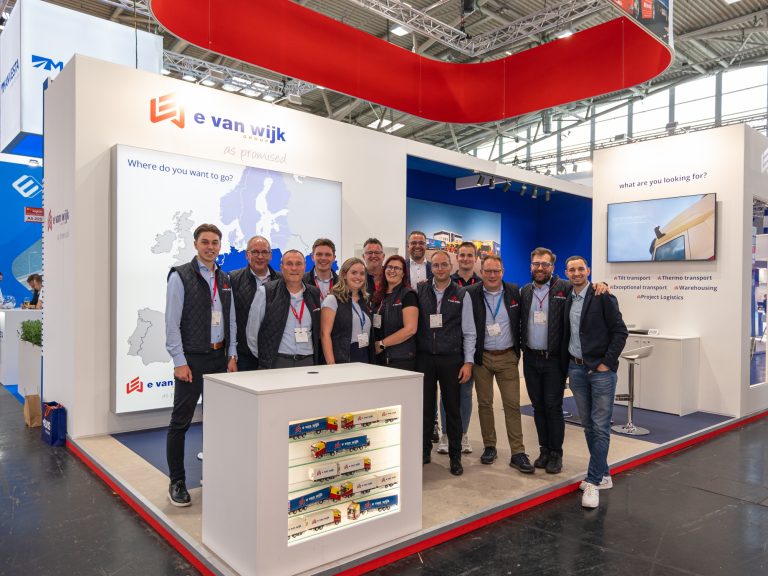
What happens when you bring together colleagues from the Netherlands, Romania and Poland at one trade fair stand in Munich? Exactly: an energetic, international team with a shared passion for logistics. Last week, E. van Wijk Group was present at transport logistic 2025 — and what a great experience it was.

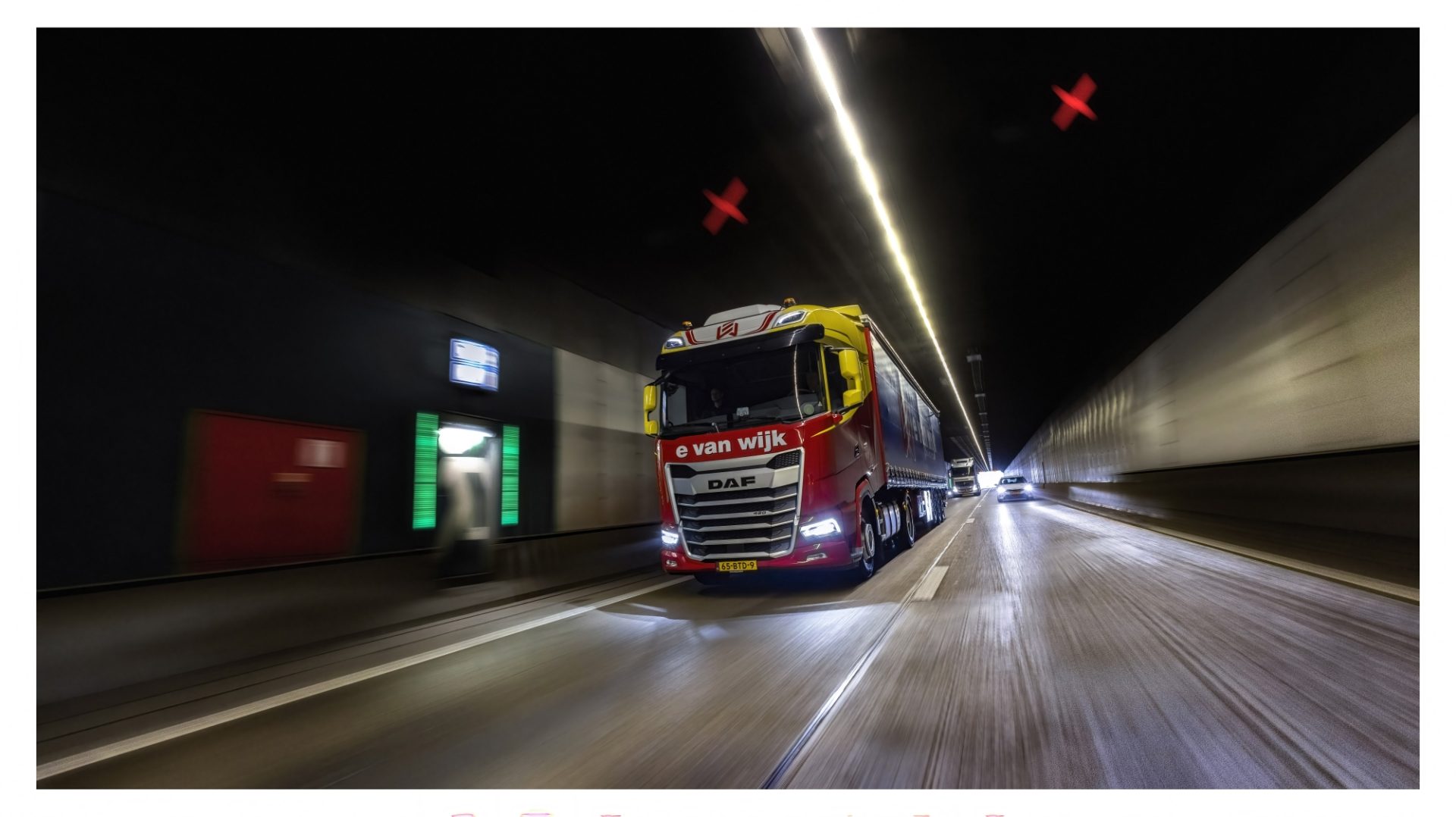
Our stand revolved around zero-emission logistics — a topic that truly drives us and aligns with our business strategy. Visitors were visibly impressed by the sustainable steps we’ve taken, such as operating 12 fully electric DAF trucks powered by our own solar park with 2,800 panels and a 4.3 MWh battery system. Pioneering isn’t always easy, but it’s rewarding to see our efforts being recognized and appreciated.

But the fair wasn’t just about technology — it was also about connection. We engaged with fellow professionals, customers, and curious visitors to share more about our international transport routes and wide range of logistics services. Two large walls at our stand showcased this diversity at a glance.

And then there was something no one could miss: the smell of freshly baked stroopwafels. A sweet nod to our Dutch roots that brought smiles and sparked great conversations.

A big thank you to everyone who stopped by for a chat. We went to Munich with a story, and returned home with even more ideas and inspiration.

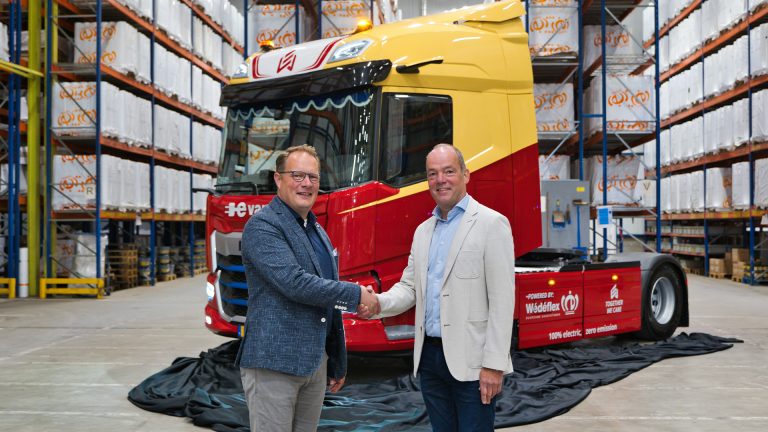
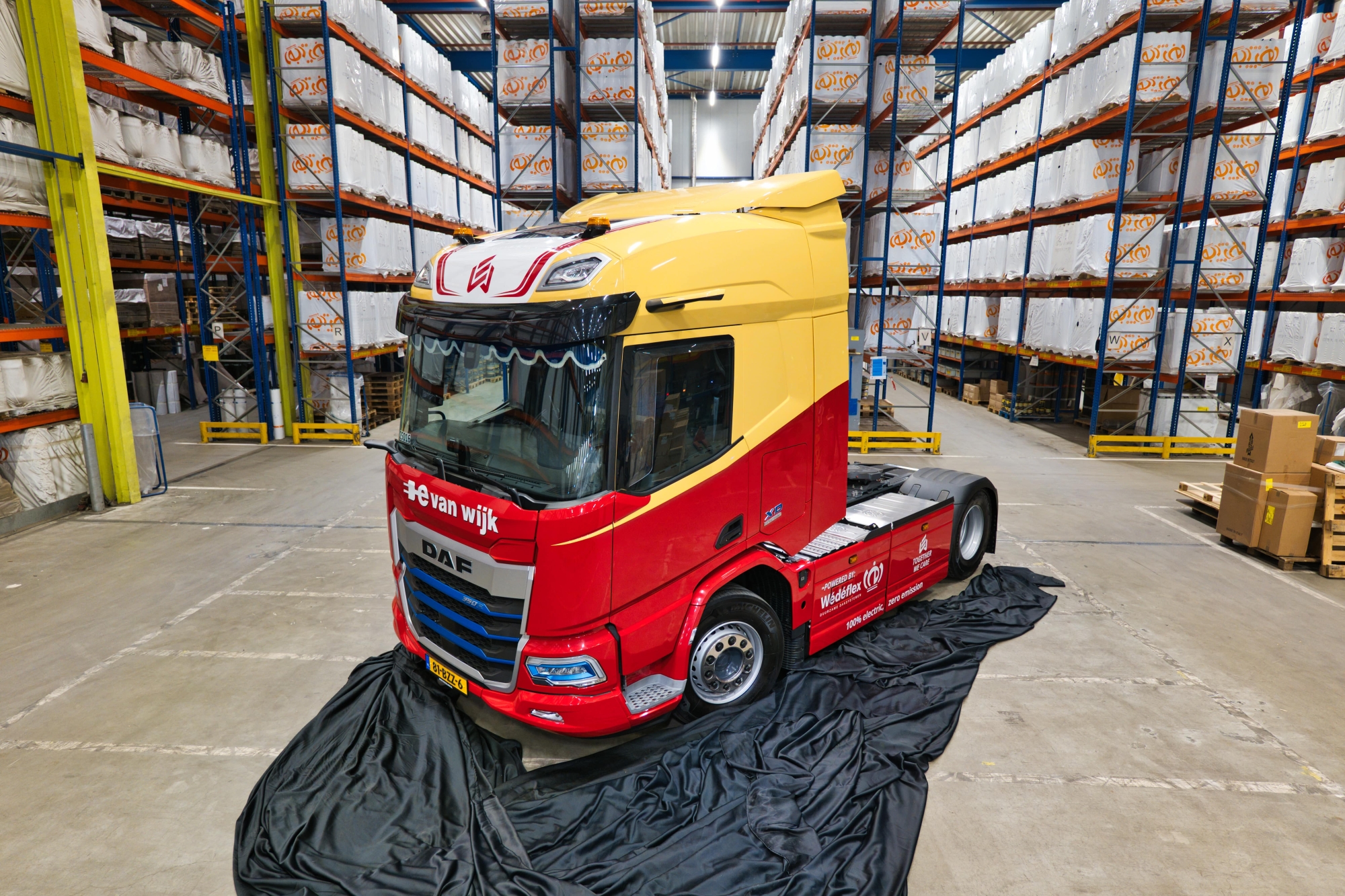
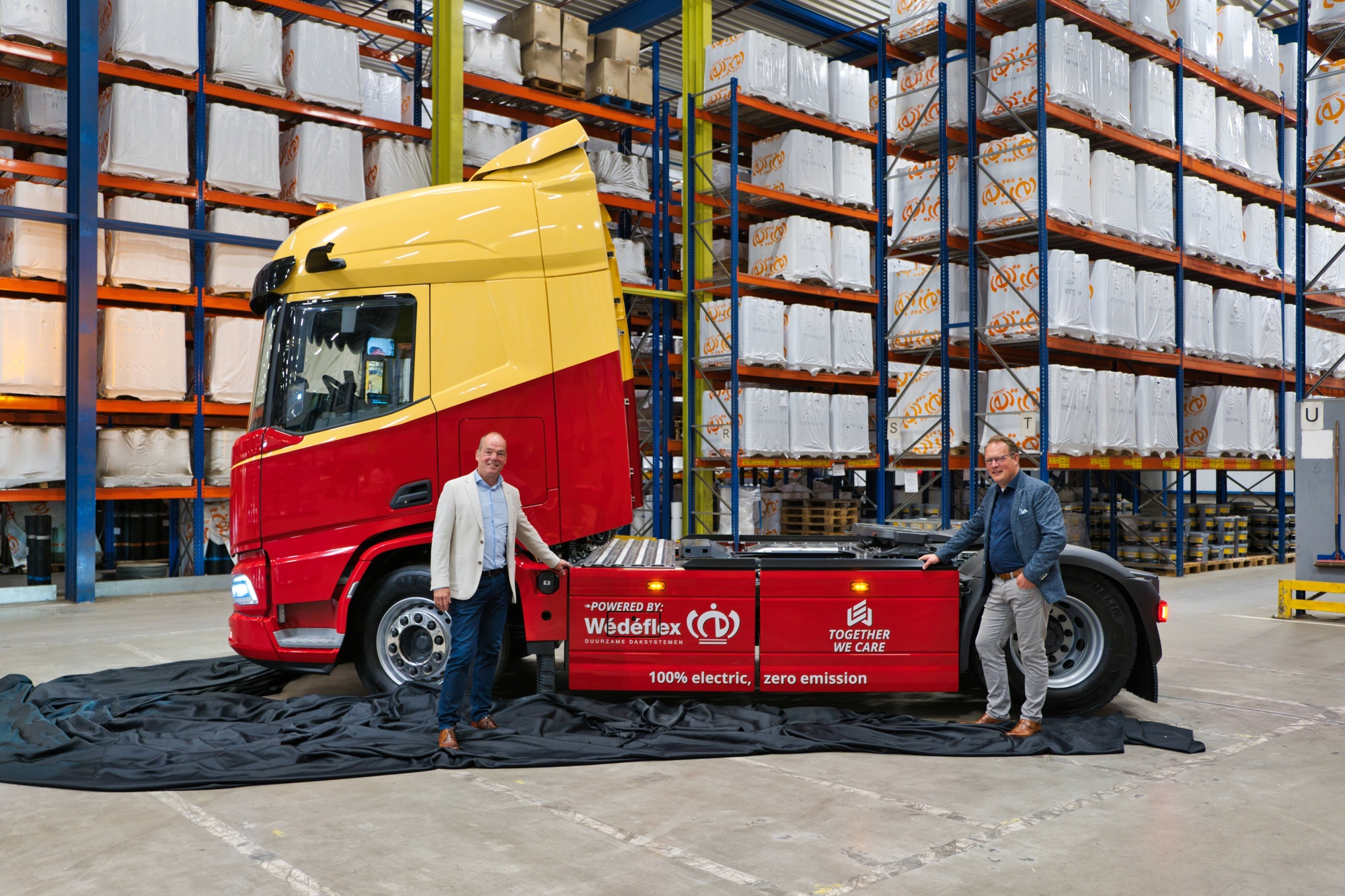
Giessen, June 2, 2025Wédéflex Sustainable Roofing Systems and E. van Wijk Logistics take the next step in their nearly 50-year partnership. Wédéflex is the first customer of E. van Wijk to deploy a fully electric DAF XD truck for zero-emission distribution within the Netherlands. This truck marks an important milestone in their shared ambition for cleaner, smarter, and quieter transport.

EV truck adoptie Wédéflex

Reliability and sustainability go hand in hand

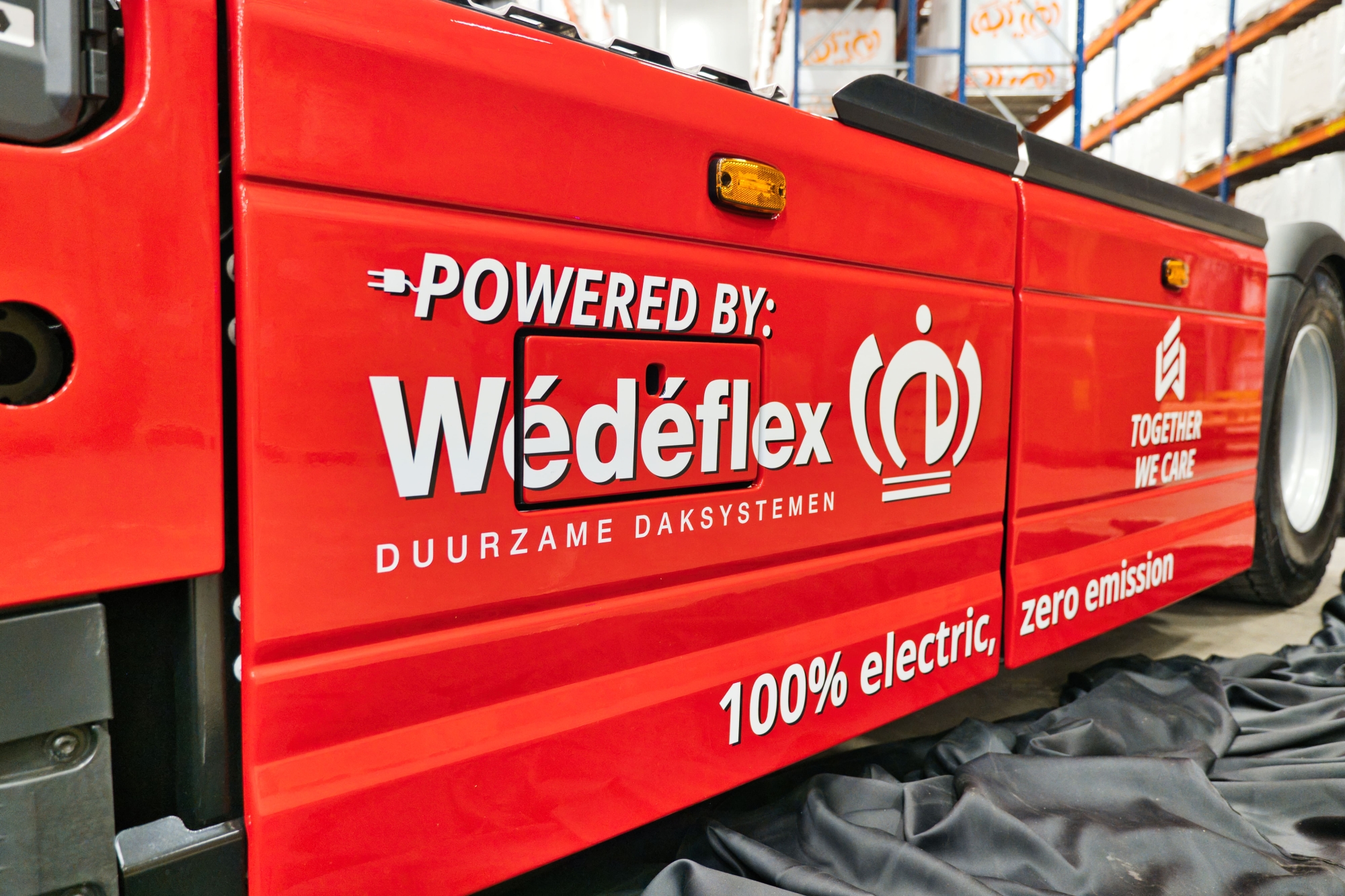
The collaboration between the two companies is built on shared core values: reliability, innovation, and social responsibility. These values are clearly reflected in their respective sustainability mottos — “Together We Care” (E. van Wijk) and “We Care” (Wédéflex). The deployment of the electric truck is a tangible example of how these values are brought to life in daily operations.

Electric driving powered by 100% renewable energy

The DAF XD Electric is a quiet, fully emission-free truck with a range of up to 450 kilometers. It is charged using solar energy generated by E. van Wijk’s own solar power system, consisting of 2,800 panels at its Giessen facility. The energy is stored in an advanced 4.3 MWh battery system, ensuring a reliable and sustainable power supply.

“The prominent Wédéflex logo on the truck symbolizes their active contribution to sustainable logistics,” says Klaas-Jan den Hertog, manager sales & marketing at E. van Wijk Logistics. “Every kilometer this truck drives means fewer emissions and greater awareness.”

Visible impact, immediate results

By deploying this electric truck, an estimated 79 tons of CO₂ emissions will be avoided annually compared to a conventional diesel vehicle. This aligns perfectly with Wédéflex’s strategy to continuously make its logistics operations more sustainable.

“This step shows that sustainable transport is not just a vision of the future — it’s a practical and achievable reality,” says Coen van der Kooij, managing director of Wédéflex sustainable roofing systems. “Together with E. van Wijk, we are proving that collaboration between client and logistics provider can deliver real, measurable impact.”

Driving toward a sustainable logistics future

By choosing electric vehicles and smart energy storage solutions, Wédéflex and E. van Wijk Logistics are actively contributing to a cleaner transport chain. With this joint initiative, both companies emphasize that sustainable business starts with concrete choices  and with partnership.

April 25, 2025 – In modern logistics, efficiency, customization, and customer satisfaction are key. Companies looking to optimize their logistics processes can greatly benefit from implementing Value Added Logistics (VAL) and Value Added Services (VAS). But what exactly do these terms mean, and how can they help your business perform better? In this article, we explain what VAL and VAS stand for and why they are essential for a successful logistics strategy.

electric trucks e van wijk


What is VAL (Value Added Logistics)?

Value Added Logistics (VAL) refers to logistics activities that add direct value to a product before it reaches the end customer. The goal of VAL is to optimize or customize products so they perfectly meet the specific needs of customers or markets.

Typical VAL activities include:

  • Packaging and repackaging – repacking products into smaller quantities or promotional packages tailored to customer specifications.

  • Labeling – applying barcodes, customer information, or other labels required for sales or distribution.

  • Assembly – combining separate parts into a finished product ready for delivery.

By applying VAL services, companies can flexibly respond to market demand and customer-specific requirements. Customers benefit from reduced effort, faster delivery times, and better availability of customized products.


What is VAS (Value Added Services)?

Value Added Services (VAS) are additional logistics services that improve efficiency and customer satisfaction. While VAL focuses on the physical product, VAS is about optimizing the surrounding service.

Examples of VAS activities include:

  • Returns management – handling returns including inspection, processing, and possible repackaging.

  • Order processing – efficient picking, packing, and shipping of customer orders.

  • Inventory management – monitoring, tracking, and optimizing stock to ensure availability.

VAS services help companies streamline processes, reduce costs, and improve the customer experience with faster and more accurate deliveries.


VAL logistics: added value through customization

VAL logistics is essential in sectors where customization, speed, and flexibility play a major role – such as fashion, electronics, or retail. By performing activities like packaging, assembly, or quality control close to the customer, companies can respond more quickly to changing needs.

Benefits of VAL logistics include:

  • Faster time-to-market

  • Lower transportation costs

  • Higher product quality at delivery

  • Flexibility in promotions or seasonal changes


VAS logistics: process optimization and customer satisfaction

VAS logistics focuses on enhancing service within the logistics chain. In sectors like e-commerce and retail — where speed and accuracy are critical — VAS makes a difference.

VAS logistics offers:

  • Improved order processing and returns handling

  • Insights into inventory and customer behavior through data analysis

  • Better planning and higher delivery reliability

  • Greater control over customer expectations

With VAS, companies increase not only their operational capacity but also their strategic agility in a rapidly changing market.


The difference between VAL and VAS

Although both VAL and VAS aim to add value, the difference lies in their focus:

  • VAL: Focuses on the product itself – such as packaging, labeling, assembly, and finishing.

  • VAS: Focuses on the service and processes – such as order management, returns logistics, and inventory optimization.

Together, they create a complete and efficient logistics chain that relieves customers and helps companies stand out in the market.


Practical application of VAL and VAS

In a competitive market, VAL and VAS services can make all the difference. They enable companies to operate flexibly and customer-oriented while optimizing internal logistics processes.

Example from practice:
In retail, VAL activities like promotional packaging and price labeling can be tailored to local campaigns. At the same time, VAS services ensure streamlined order processing, faster deliveries, and fewer returns. The result? Satisfied customers and a more efficient supply chain.


VAL and VAS as a strategic advantage

Value Added Logistics (VAL) and Value Added Services (VAS) are not extras — they are strategic tools to strengthen your logistics processes and build your competitive edge. By smartly integrating these services into your supply chain, you increase both product value and customer satisfaction.


Why choose VAL and VAS from E. van Wijk?

At E. van Wijk Logistics, we understand how important flexibility, customization, and reliability are in modern logistics. With over 75 years of experience, we offer complete VAL and VAS solutions tailored to the unique needs of your organization.

Whether it’s repackaging, labeling, assembly, returns management, or advanced order processing — we ensure everything is done right, down to the smallest detail.

What you can expect from us:

  • Customized logistics solutions

  • Fast and reliable execution

  • Complete end-to-end service

  • Scalable offerings for growing businesses

Contact us today to discover how we can help optimize your logistics and grow your business further.


The reintroduction of border controls in Europe is causing concern in the transport sector. However, in practice, freight transport is hardly affected. Deliveries remain on schedule and traffic jams have not materialized. In this blog, you will read what this means for your logistics, how the authorities assess the situation, and how E. van Wijk Logistics supports you in this process.


electric trucks e van wijk

Why Have Border Controls Returned at European Borders?

Temporary border controls have been reintroduced by several EU countries to gain better control over security, migration, and international tensions. Among others, Germany and the Netherlands have recently started conducting random checks along their borders.

Background to the Temporary Checks

The decision stems from growing concerns about illegal migration, cross-border crime, and geopolitical instability. While the Schengen Agreement guarantees free movement across EU member states, it also allows for temporary border controls under exceptional circumstances.

Expectations vs. Reality: ANWB and DNHK Perspectives

Where there were initially concerns about delays and congestion, the reality has turned out to be more favorable. According to the ANWB’s traffic reports, traffic continues to flow smoothly—even at busy border crossings. The German-Dutch Chamber of Commerce (DNHK) also notes that the overall impact on freight transport remains limited, although extra attention is advised when transporting fresh or time-sensitive goods.

Impact on Transport and Freight in Practice

Minimal Delays on Key Routes

Important logistics routes such as Venlo–Duisburg remain easily accessible. Carriers experience delays of only a few minutes at most. The border controls are conducted efficiently and on a random basis.

Drivers and Planners: Hardly Any Noticeable Difference

Transport planners and drivers report that there is hardly any noticeable difference. On major routes, the impact of the controls is minimal, ensuring that transport reliability remains high.

ANWB: Traffic Jams More Often Caused by Other Factors

According to the ANWB, traffic jams nowadays are more often caused by roadworks, accidents, or rush-hour congestion than by border controls. Therefore, transport disruptions are rarely caused by the temporary measures.

Information from the German-Dutch Chamber of Commerce (DNHK)

Trade Flows Remain Stable Despite Controls

The DNHK emphasizes that tens of thousands of trucks cross the border daily without significant disruption. As a result, trade flows between the Netherlands and Germany remain largely intact.

Collaboration Between Companies Remains Strong

Despite the additional controls, cross-border transport continues to run smoothly thanks to good communication and cooperation between carriers, clients, and authorities.

How E. van Wijk Responds to Border Controls in Practice

Real-Time Route Management and Detour Strategies

At E. van Wijk Logistics, we use advanced route planning systems, GPS data, and traffic information to detect potential disruptions early and implement alternative routes.

Proactive Communication with Customers and Partners

We keep our customers proactively informed about current delivery times and any changes. This way, you always know what to expect, even during border controls.

Coordination with Authorities and DNHK Information

We continuously monitor developments from organizations such as ANWB and DNHK, enabling us to respond quickly to changes and use the most up-to-date information in our planning

What Does This Mean for the Future of International Transport?

Temporary Measure or Return to Permanent Controls?

Experts expect these border controls to be temporary, but the situation remains unpredictable. It is therefore important for transport operators to stay flexible and well-prepared.

The Role of Digitalization and Collaboration in Resilience

Digitalization and collaboration are crucial for future-proof transport. Smart systems, data sharing, and strong logistics partnerships make the sector more resilient to uncertainties.

Well-Organized Transport Keeps Moving

Border controls require vigilance, but there is no need for panic. At E. van Wijk Logistics, we ensure that your goods keep moving smoothly. Thanks to our experience, smart technology and clear communication. Your transport process experiences minimal disruption even during border controls or other international challenges.

Discover more on our International Transport page or get in touch directly via our Contact page to discuss your logistics needs.


Giessen, 5 April 2025 – E. van Wijk Logistics takes delivery of six new DAF XD Electric trucks
E. van Wijk Logistics has welcomed six brand-new DAF XD Electric trucks to its fleet. These fully electric tractors, offering a range of up to 500 kilometers, are currently being tested in collaboration with DAF Trucks. The delivery follows a successful earlier trial with the DAF XF Electric, which has been in daily operation since last year. With this latest addition, E. van Wijk electric fleet will grow to a total of twelve vehicles by the end of this year.

DAF XD electric - E van Wijk

The DAF XD Electric is part of DAF’s latest generation of trucks — specifically designed for zero-emission urban and regional transport, without compromising on performance or driver comfort. These vehicles represent a new era in transport and logistics, focused on electrification, sustainability, and technological innovation.

That forward-looking vision is also reflected within the family business itself. At the time of delivery, a symbolic moment was captured: Ewout van Wijk, CEO and third generation of the family-owned company, received the keys to the new DAF trucks alongside his son Matthieu — the fourth generation. Together, they look ahead to a sustainable future where innovation and responsibility go hand in hand.

The six new trucks will be deployed on selected routes and play a key role in the current testing phase, where real-life performance, operational readiness, and charging infrastructure are being closely evaluated. To support this, E. van Wijk operates its own charging infrastructure, fully powered by 2,800 solar panels with a capacity of 1.5 megawatts. Combined with a 4.3 MWh battery storage system, this setup enables the company to charge up to eight electric trucks per day — fully emission-free.

“This delivery marks another important step in the decarbonization of our logistics operations,” says Ewout van Wijk. “We’re proud of our collaboration with DAF Trucks and Truckland and we will continue to invest in smart, sustainable solutions. For today and for the future.”

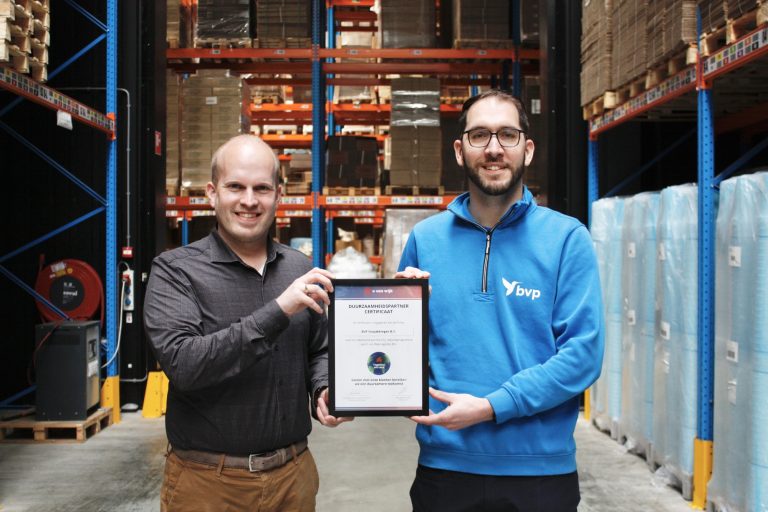
Giessen, 4 april 2025. We are proud to welcome BVP as our newest sustainability partner. With this step, BVP is making a conscious move toward greener transport: from now on, all their logistics will run on HVO100 – a high-quality biodiesel made from used vegetable oils. This circular fuel delivers an impressive CO₂ reduction of up to 89% compared to conventional diesel – and it does so without the need for new infrastructure.

BVP duurzaamheidspartner

From Green Packaging to Green Transport
BVP has long been a pioneer in sustainable packaging. By approaching packaging challenges in smart and innovative ways, they manage to reduce material use by up to 60%. Their commitment to sustainability is further demonstrated by their reuse of waste materials and ISO 14001 certification – proving that for BVP, sustainability isn’t just an ambition, but a proven way of working.

While BVP focuses on making the packaging industry more sustainable, we at E. van Wijk are tackling the logistics side of the chain. And that’s where the true strength of our collaboration lies:
A more sustainable supply chain, where products are not only sustainably packaged but also sustainably transported.

Building a Future-Proof Supply Chain – Together
The partnership between BVP and E. van Wijk goes beyond a practical solution. It stands as an example of what’s possible when companies join forces with a shared vision for a sustainable future. By linking packaging optimization with green logistics, we’re creating a supply chain that is both efficient and responsible.

We believe in a future where sustainability is not the alternative, but the standard. And thanks to partnerships like this one, we’re getting one step closer every day.

Ready to Take the Next Step in Sustainability?
Curious about how to make your logistics chain greener? Or would you, like BVP, like to integrate sustainability into every step of your process? We’d love to think along with you. Get in touch and discover how we can make the transition together – load by load, choice by choice.

The European Commission has decided to temporarily postpone the implementation of stricter CO₂ targets for trucks and vans.
This decision has sparked debate within the transport sector. What does this delay mean for transport companies, fleet renewal, investments, and the transition to zero-emission trucks?

At E. van Wijk Logistics, we closely monitor these developments. Below, we outline the implications, opportunities, and risks for businesses involved in sustainable freight transport.

electric trucks e van wijk

What Do the European CO₂ Targets Involve?

The European CO₂ targets are intended to drastically reduce emissions from freight transport and to accelerate the transition to zero-emission trucks. With these regulations, the EU aims to make freight transport more sustainable and to contribute to the climate goals for 2050.

Objectives for 2030 and Beyond

The original plans were ambitious:

  • By 2030, the average CO₂ emissions of new trucks had to be reduced by 45% compared to 2019.

  • By 2040, this would rise to a 90% reduction.

This would provide a strong boost to the deployment of zero-emission trucks throughout Europe.

Impact on Manufacturers and Carriers

The targets had major impact. Manufacturers such as Volvo, DAF and Mercedes invested heavily in electric trucks. Transport companies, meanwhile, started integrating e-trucks into their fleets, often through pilots and phased purchases.

Why Are the CO₂ Targets Postponed?

Political Decision-Making Within the EU

Within the European Parliament and the Council of the EU, concerns have been expressed about the feasibility of the stricter standards. The current economic uncertainty means that some member states want more time to support the transition.

Objections from the Transport Sector and Member States

There are also objections from the transport sector, such as:

  • The high purchase costs of electric vehicles

  • Insufficient available charging infrastructure

  • Delivery problems at manufacturers

Therefore, the introduction of new rules has been temporarily postponed, but they are certainly not off the table.

What Does This Mean for Carriers in the Netherlands?

Progress Delayed, but Not Stopped

Although the pace nationally will slow somewhat, the direction towards sustainability remains clear. Many companies have long been investing in cleaner alternatives and are continuing their strategy.

Investment Space for Entrepreneurs

The postponement offers carriers more space to invest in phases. Think of sustainable fuels such as HVO100, hybrid vehicles or the step-by-step purchase of zero-emission trucks.

Adjustment of Fleet and Strategy

For entrepreneurs, there is room to plan the transition smartly. In addition to vehicle investments, fleet management, route optimization and new technology also play a major role in CO₂ reduction.

EV Market in Motion

What Do Manufacturers Such as Volvo, DAF and Mercedes Say?

Despite the postponement, major players continue to invest. Electric trucks are further developed, tested and sold. Demand is growing, partly thanks to subsidies and incentive schemes.

Future of Charging Infrastructure and Subsidies

Yet uncertainties remain. In many regions, charging infrastructure is lagging behind and there is sometimes a lack of sufficient power capacity. At the same time, there are opportunities for cooperation between governments, grid operators and logistics companies.

How Does E. van Wijk Logistics Deal with CO₂ Reduction?

At E. van Wijk Logistics, sustainable transport has been central for years. We do not wait for legislation. We are ahead of the curve! Based on our vision of logistics innovation and sustainable transport, we continuously invest in a future-proof fleet.

Investing in Cleaner Alternatives

Our fleet now includes 12 electric DAF trucks. For routes where fully electric is not yet feasible, we focus on HVO fuels and other sustainable solutions.

Monitoring and Awareness Among Drivers

CO₂ reduction does not come only from vehicles. More economical driving behavior, efficient planning and smart fleet management also result in measurable savings. At E. van Wijk, we invest in this as well  and that will not stop in 2025.

Looking Ahead to 2035 and Beyond

Our long-term vision is clear: step by step towards zero-emission logistics. With innovation, cooperation and responsibility, we take concrete steps towards a climate-neutral sector.

CO₂ Reduction Programs at E. van Wijk: Tailored Sustainability

Unique within the sector is our CO₂ reduction program for customers. With this, companies can demonstrably contribute to CO₂ reduction without having to invest themselves in vehicles or infrastructure.

An important part is the adoption of an electric truck. Companies link their transport need to one of our e-trucks and can claim the associated CO₂ savings for their own sustainability goals.

In addition, the use of HVO fuel is also made transparent, so that customers know exactly how much CO₂ they save per shipment. This makes CO₂ saving possible, measurable and usable for CSR objectives, tenders and CO₂ footprint reporting.

At E. van Wijk Logistics, we believe sustainability is not just a responsibility, but an opportunity. Together with our partners and customers, we make measurable CO₂ reduction achievable and transparent.

Learn more on our Sustainability page or get in touch directly via our Contact page.

In the rapidly evolving world of logistics, more and more companies are choosing to outsource in order to make their processes more efficient, scalable, and flexible. One of the most popular models within this trend is 3PL Logistics, or Third Party Logistics. But what exactly is 3PL? In short, it means outsourcing your logistics activities — such as transportation, warehousing, and order fulfillment — to an external party: a 3PL partner.

For organizations looking to professionalize their logistics operations or avoid investing in warehouses, personnel, and transportation assets, 3PL in the Netherlands is a logical step. In this article, we explain what 3PL involves, the meaning of 3PL, how it differs from other models like 2PL and 4PL, and when it is the right choice.

What Does 3PL (Third Party Logistics) Mean?

3PL, also known as Third-Party Logistics or 3rd Party Logistics, refers to a logistics model in which an external service provider is responsible for multiple parts of the logistics process. This may include warehousing, order fulfillment, picking and packing, and handling returns.

Unlike 2PL, where only transportation is outsourced, a 3PL partner plays a much larger role. As a company, you remain strategically responsible, but the execution from warehouse to end customer is handled by the 3PL logistics provider.


Difference Between 2PL and 3PL Logistics

The difference between 2PL and 3PL lies in the level of outsourcing. With 2PL, you only outsource transportation, while warehousing and order processing remain in-house. With 3PL, transport, storage, and fulfillment are fully managed by a third party.

Comparison Table:

Aspect 2PL 3PL
Warehousing In-house Outsourced to 3PL partner
Transport Outsourced to carrier Outsourced to 3PL partner
Order Processing In-house Outsourced to 3PL partner
External Partners Only for transport For transport, warehousing, returns
Control Partial More outsourced, less internal

Real-World Examples of a 3PL Approach

A 3PL approach is ideal for companies that want to scale quickly or lack internal capacity for complex logistics operations. Think of e-commerce companies, retailers, and manufacturers with national or international distribution.

Examples of 3PL Logistics in practice:

  • Outsourcing storage to a 3PL warehouse

  • Order picking and shipping handled by the 3PL partner

  • Return handling and customer service related to deliveries

  • Inventory management via integrated IT systems


Difference Between 3PL and Other Models (1PL, 2PL, 4PL)

The chart below shows how 3rd party logistics compares to other models in the supply chain. Each level represents a different degree of outsourcing and control:

Logistics Model Who Does the Work? Example Activity
1PL You Production, warehousing, transport
2PL External carrier Transport with hired drivers
3PL External logistics provider Transport, storage, order processing
4PL Supply chain orchestrator Full chain coordination and optimization

Curious about the other models? Read our blogs on 1PL, 2PL, and 4PL logistics.


3PL Management: Strategic Control of Logistics Performance

With 3PL management, your company remains in control of the strategic direction, while the 3PL provider takes care of the execution. This means you no longer need to manage warehouse space or transportation, but you do manage quality, delivery times, and customer satisfaction.

Your role in 3PL Logistics:

  • Define KPI’s and SLA’s

  • Monitor the performance of your 3PL partner

  • Set strategy and scale where needed


Benefits of 3PL Logistics

  • Complete logistics relief

  • Economies of scale through shared infrastructure and capacity

  • Fast implementation of fulfillment and distribution

  • Focus on core activities like sales and product development

  • Access to advanced technology (WMS, tracking, data insights)


Potential Drawbacks of 3PL

  • Less direct control over operations

  • Greater dependency on external partners

  • Need for clear agreements and strong contract management


Working with E. van Wijk Logistics as a 3PL Partner

When choosing Third Party Logistics, selecting the right partner is crucial. E. van Wijk Logistics is an experienced 3PL partner in the Netherlands, helping businesses fully outsource their logistics operations.

What can E. van Wijk Logistics offer you within a 3PL model?

  • Transport services across the Netherlands and Europe

  • Warehousing including inventory management, cross-docking, and fulfillment

  • Order processing and returns management

  • Scalable solutions for seasonal peaks or growth

  • Integrations with your systems for real-time insights

With E. van Wijk, you have a partner who supports every stage of the logistics process  from inbound goods to final delivery. We handle the execution – you retain control. Exactly as effective 3PL management should be.


Also read:

Request a quotation