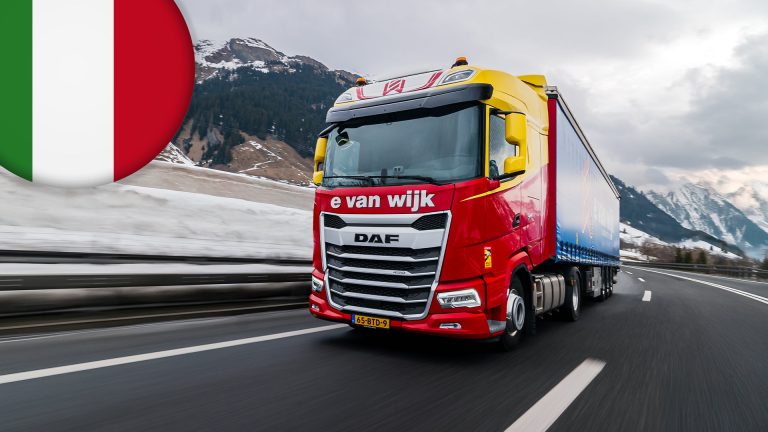
Giessen, April 22, 2025 – As an international transport company, it is essential to stay informed about the local rules and regulations in the countries where you operate. Italy, with its strategic location and extensive logistics networks, plays a vital role in European transport. Compliance with Italian transport regulations is crucial for an efficient and trouble-free operation. In this article, we discuss the most important transport rules in Italy and provide detailed information on the requirements that carriers must follow.
Transport regels Italië

Why are Italian transport regulations important for carriers?

Italy is a vital hub for international transport and logistics. The country boasts an extensive road network connected to major European and Mediterranean trade routes. Strict compliance with Italian transport regulations is not only necessary to avoid fines and delays but also to ensure the safety and sustainability of transport operations. At E. van Wijk Logistics, we ensure that we always comply with Italian legislation, allowing us to offer the highest standards of reliability to our customers.

Legal requirements for transport in Italy

When transporting to or through Italy, it is important to follow both European regulations and national laws. Italy has specific regulations regarding driving times, environmental standards, tolls, dimensions, weights, and access restrictions.

EU Regulation 561/2006: Driving and Resting Times

EU Regulation 561/2006, which is also in force in Italy, governs the driving and resting times for drivers. The purpose of this regulation is to improve road safety and protect the working conditions of drivers.

  • Maximum driving time: 9 hours per day (exceptionally 10 hours, but no more than twice a week).

  • Minimum rest period: 11 hours per day (can be reduced to 9 hours, but no more than three times a week).

  • Weekly limit: A maximum of 56 hours of driving time per week and 90 hours in two consecutive weeks.

Toll Collection (Pedaggio) in Italy

Italy has an extensive toll road system that covers almost all motorways. The toll is calculated based on the distance traveled, the type of vehicle, and its emission class.

Key aspects of the Italian toll system:

  • Distance: Costs depend on the number of kilometers driven.

  • Vehicle category: Trucks with more axles and higher weight pay higher rates.

  • Emission class: Greener vehicles (e.g., Euro 6) benefit from lower rates.

  • Payment: Tolls can be paid via electronic systems such as Telepass or at toll stations along the motorway.

The use of an On-Board Unit (OBU) like Telepass can speed up transit and reduce administrative burdens.

Environmental Regulations and Access Restrictions

Many Italian cities have environmental zones (Zone a Traffico Limitato, ZTL), where vehicles are only granted access if they meet strict emission requirements. These zones are intended to improve air quality, particularly in historical city centers.

Environmental Zones (ZTL) and Emission Standards:

  • Euro 6 vehicles: Often have access to ZTL areas.

  • Older vehicles: Such as Euro 4 or lower, are usually restricted or must apply for a special permit.

  • Fines: Entering a ZTL without a permit can result in heavy fines. It is important to check the local regulations for each specific city.

Maximum dimensions and weights

Italy has specific rules regarding the maximum dimensions and weights of vehicles. These regulations are designed to protect road safety and infrastructure.

Maximum dimensions:

Height: Maximum 4.00 meters.

Width: Maximum 2.60 meters for refrigerated vehicles; maximum 2.55 meters for other vehicles.

Length: Maximum 12.00 meters for a single truck.

Maximum weights:

Total weight: Maximum 40 tonnes for standard combinations.

Axle load: Maximum 12 tonnes per single axle.

Special permits are required if these limits are exceeded.

Driving bans in Italy

In Italy, specific driving bans apply to trucks over 7.5 tonnes on Sundays and public holidays. The purpose of these bans is to reduce traffic congestion during peak periods.

When does the driving ban apply?

Sundays: From 9:00 AM to 10:00 PM.

Public holidays: The ban applies on national holidays such as:

Easter and Easter Monday.

Republic Day (Festa della Repubblica) on June 2.

Christmas (December 25 and 26). 

Summer driving bans

During the summer months of July and August, additional driving bans apply to regulate traffic during the holiday season.

Exceptions to the Italian transport driving ban rules:

  • Urgent deliveries: Goods such as medicines, fresh produce, or medical equipment.

  • Transport to ports: In some cases, transport to ports is exempt from the driving ban.

  • Special permits: These can be requested for high-urgency shipments.

Transport of Dangerous Goods

Italy follows the rules of the ADR agreement (Accord Dangereuses Marchandises par Route) for the transport of dangerous goods. This includes guidelines for packaging, labeling, documentation, and the use of approved vehicles.

Key requirements:

  • Vehicles must be clearly marked with ADR symbols.

  • In some cases, specific routes are mandatory.

  • Carriers require an ADR certificate to transport dangerous goods.

Safety and Traffic Regulations in Italy

Traffic regulations in Italy differ in some respects from those in other European countries. A few key points of attention:

Speed limits:

80 km/h on motorways for trucks over 3.5 tonnes.

50 km/h within built-up areas.

Lighting: The use of dipped headlights is mandatory, even during the day.

Safety equipment: Wearing a reflective safety vest and having a warning triangle in the vehicle is mandatory.

At E. van Wijk Logistics, we ensure that we are fully informed of all transport regulations in Italy. This allows us to transport your shipments smoothly and in full compliance with the law. Do you have questions about transport rules in Italy or would you like to know more about our services? Please feel free to contact us!

Read also: Transport regulations in Germany
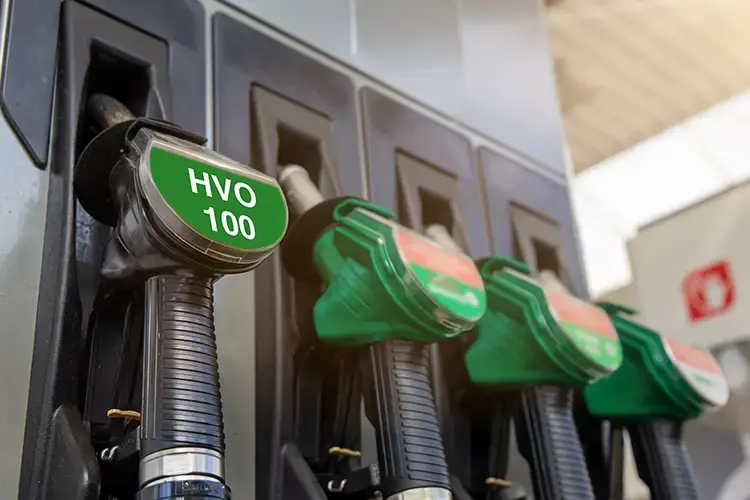
In a world where sustainability is becoming increasingly important, companies are seeking ways to reduce their CO₂ emissions without compromising efficiency. One of the most promising developments in sustainable transport is the use of HVO100, a fossil-free, renewable diesel alternative.

But what exactly is HVO100, what are its benefits, and why are more and more businesses making the switch?

In this blog, we explain what HVO100 is, how it works, and why it’s a powerful tool for companies looking to make their logistics more sustainable.

What Is HVO100 Fuel?

HVO100 stands for Hydrotreated Vegetable Oil, a synthetic, renewable diesel made from sustainable waste streams such as used vegetable oils and animal fats. The ‘100’ indicates that the fuel is 100% HVO, with no blend of fossil diesel.

This makes HVO100 a completely fossil-free fuel that can reduce CO₂ emissions by up to 89% compared to conventional diesel.

One major advantage of HVO100 is that it can be used immediately in existing diesel vehicles, provided they are approved for HVO100. This means companies can continue to use their current fleet without needing to invest in new trucks or fueling infrastructure.

The Benefits of HVO100 for Transport Companies

  • Up to 89% CO₂ reduction
    Compared to standard diesel, HVO100 enables a significant reduction in greenhouse gas emissions. For companies aiming to contribute to climate targets, HVO100 offers a measurable, direct step toward low-emission transport.

  • Compatible with existing diesel engines
    No technical modifications are required. If a vehicle is approved for HVO100, it can run on the fuel right away — making it a low-barrier sustainability solution.

  • Cleaner combustion
    HVO100 produces fewer particulates, soot, and nitrogen oxides (NOx), which contributes to improved air quality, especially in urban environments.

  • Renewable and circular
    Made from recycled oils and fats, HVO100 is a circular fuel, reducing both fossil fuel consumption and waste.

Why More Companies Are Switching to HVO100

More businesses are embracing HVO100 as a key part of their sustainability strategy. It’s a practical and effective way to reduce CO₂ and pollutant emissions without the need for large investments or complex operational changes.

Unlike many green initiatives that require infrastructure upgrades or new vehicles, HVO100 can be used immediately with compatible engines — making it a cost-effective and accessible solution.

HVO100 also fits neatly into broader environmental goals. It enables organizations to track and report emissions reductions, which is increasingly important for transparency with clients, stakeholders, and in ESG reporting.

Whether you’re just starting your sustainability journey or are already far along, HVO100 can be a valuable step in building a cleaner logistics strategy.

HVO100 at E. van Wijk

At E. van Wijk Logistics, partners who choose HVO100 receive full support in their sustainability ambitions. Companies using HVO100 benefit from an official sustainability certificate, issued annually. This certificate details the exact amount of HVO100 consumed and the corresponding CO₂ reduction achieved.

Because HVO100 can reduce emissions by up to 89%, it not only helps companies shrink their environmental footprint, but also enables them to demonstrate their impact to customers, clients, and other stakeholders in a clear and measurable way.

Ready to take the next step in sustainable logistics? Contact us today and discover how E. van Wijk Logistics can support your transition to HVO100.

Giessen, March 14, 2025 – As an international transport company, it is crucial to be fully informed of the local rules and regulations of the countries in which you operate. Germany plays a central role in the European logistics sector, and compliance with German transport regulations is essential for smooth and trouble-free operations. In this article, we discuss the key transport regulations in Germany and provide detailed information on the requirements that carriers must follow.

Transport regels Duitsland

Why are transport regulations in Germany important for carriers?

Germany is one of the largest logistics markets in Europe, and the rules for road transport are strict and extensive. Compliance with these regulations is not only important for avoiding fines and delays but also for ensuring the safety and efficiency of the transport sector. At E. van Wijk Logistics, we ensure that we always comply with German legislation, allowing us to offer the highest standards of reliability to our customers.

Legal requirements for transport in Germany

When transporting to or through Germany, it is important to be familiar with both European legislation and national regulations. In Germany, there are various rules regarding driving times, weight limits, emission standards, and toll charges.

EU Regulation 561/2006: Driving and Rest Times

EU Regulation 561/2006 governs the driving and rest times for drivers within the EU and applies to trucks driving to and within Germany. The purpose of this regulation is to improve road safety and protect the health of drivers. The regulation prescribes the number of hours a driver is permitted to drive and the amount of rest he or she must take.

  • Maximum driving time: 9 hours per day (may be extended to 10 hours in exceptional cases, but no more than twice a week).

  • Minimum rest period: 11 hours of rest per day (can be reduced to 9 hours, but no more than three times a week).

German Road Traffic Act (StVO)

The German Road Traffic Act (Straßenverkehrs-Ordnung, abbreviated as StVO) regulates road safety and other traffic rules. This legislation applies to all road users in Germany, but also contains specific regulations for freight transport.

Key regulations include:

  • Speed limits: In Germany, a speed limit of 80 km/h applies to trucks on motorways, unless otherwise indicated. Within cities and residential areas, a limit of 50 km/h usually applies to trucks.

  • Mandatory rest areas: Trucks must take their rest periods at approved parking areas along the motorways. It is important to know where these locations are to avoid fines.

Toll charges (Maut) in Germany

Germany has a Maut system (toll collection) for trucks using the motorways and certain national roads. This toll is calculated based on various factors, such as the vehicle’s weight, the number of axles, and the emission class.

Key aspects of the German Maut system:

Factor 

Description

Costs

Vehicle weight

Trucks over 3.5 tonnes are subject to toll charges

Approximately €0.03 – €0.20 per kilometer depending on weight

Number of axles

Trucks with more axles pay higher tolls

Increased costs per additional axle

Emission class

Green vehicles pay lower tolls

– Euro 6: Lower toll rate


– Euro 4, Euro 5: Higher toll rate

Distance (kilometers)

The toll is calculated based on the number of kilometers driven

Costs vary per kilometer driven

How does the Maut work in Germany?

The toll is collected automatically via On-Board Units (OBU) installed in the trucks. These units communicate with toll gantries along the motorways, making the process fast and efficient. The costs are calculated based on the number of kilometers driven on toll roads and the specific characteristics of the vehicle.

Transport of dangerous goods

Germany has strict rules for the transport of dangerous goods, which are laid down in the ADR agreement (Accord Dangereuses Marchandises par Route). These regulations are intended to ensure the safety of transporting hazardous substances.

What does the ADR involve?

The ADR is an international treaty that sets the rules for the transport of dangerous goods by road. It contains guidelines for the classification of hazardous substances, packaging, labeling, and documentation.

Carriers of dangerous goods must hold specific permits, and their vehicles must meet certain safety standards.

Requirements for dangerous goods in Germany

  • Safety markings: Trucks transporting dangerous goods must be clearly marked with specific symbols and labels.

  • Designated routes: In some cases, trucks carrying dangerous goods must follow specific roads or designated routes.

  • Specific documents: The transport of dangerous goods requires detailed documentation, such as the dangerous goods transport document.

Environmental regulations and access restrictions in Germany

Germany has a number of low-emission zones (Umweltzonen) where only vehicles that meet specific emission requirements are allowed to drive. These rules apply in many major cities and are intended to improve air quality.

Low-emission zones (Umweltzonen) and emission standards

The Umweltzonen can be found in cities such as Berlin, Munich, and Hamburg. Trucks that do not meet a sufficiently low emission class (for example, Euro 4 or lower) are prohibited from entering these areas. This applies particularly to older vehicles.

  • Euro 6 vehicles: Comply with the strictest emission standards and benefit from the lowest tolls and fewest access restrictions.

  • Euro 5 vehicles and lower: May be excluded from certain areas if they do not meet the specific emission requirements.

Sunday and public holiday driving bans in Germany

What does the driving ban involve?

In Germany, a general driving ban for trucks applies on Sundays and public holidays. This ban applies to vehicles with a weight exceeding 7.5 tonnes. It is applicable to all motorways and national roads.. 

When does the driving ban apply?

The ban on driving on Sundays and public holidays usually applies for the entire day, from 0:00 to 22:00. However, there are some exceptions and variations to this ban depending on the type of holiday and specific circumstances.

In Germany, there are several national public holidays on which the driving ban applies. Some of the most important holidays when this ban is in effect include:

  • Good Friday (Karfreitag) – The Friday before Easter

  • Easter Monday (Ostermontag) – The Monday after Easter

  • Ascension Day (Christi Himmelfahrt) – 40 days after Easter

  • Whit Sunday and Whit Monday (Pfingstsonntag & Pfingstmontag) – 50 days after Easter

  • German Unity Day (Tag der Deutschen Einheit) – October 3rd

  • Christmas (Weihnachten) – December 25th and 26th

  • New Year’s Day (Neujahrstag) – January 1st

There are several important exceptions to the truck driving ban:

  • Urgent deliveries: Trucks transporting vital goods, such as medicines, medical equipment, or perishable goods, can often obtain an exemption and continue their journey.

  • Transport of dangerous goods: Under certain circumstances, trucks transporting hazardous substances may also be exempted from the ban.

  • Local transport: In some cases, the driving ban may not apply to trucks that remain within urban areas or only perform local transport operations.

  • Special permits: Carriers can apply for a special permit to drive on Sundays and public holidays, but this is usually only possible under specific conditions and must be approved in advance.

At E. van Wijk Logistics, we ensure that we are always up to date with the latest regulations and are happy to assist you in planning your shipments, ensuring they arrive on time, without issues, and in full compliance with the law. Do you have questions about transport regulations in Germany or would you like to know more about our services? Contact us today!

Read also: Transport Regulations in Italy

February 22, 2025 – In the rapidly changing world of logistics, it is crucial to continuously respond to the needs of your company and customers. One innovative solution that is increasingly helping businesses streamline their supply chains is 4PL logistics. But what exactly is 4PL, and how can it improve your logistics processes? In this article, we explain what 4PL means, its benefits, and how it can contribute to a more efficient and sustainable business model.

Transport Zwitserland

What does 2PL (Second Party Logistics) mean?

2PL, or Second Party Logistics, refers to logistics services provided by an external party that is solely responsible for the execution of transportation. Think of a transport company that moves goods for you from location A to location B.

Unlike 1PL, where you manage everything yourself, with 2PL you only outsource the transportation. You remain responsible for managing the logistics processes, while the execution of the transport is handled by a specialized carrier.


Difference between 2PL and 3PL logistics

In 2PL logistics, a company outsources only the transport to an external party, while keeping storage and order processing in-house. This means the company still directly manages warehouse operations and order handling but uses specialized carriers for transporting goods.

3PL logistics takes this a step further. Here, a company outsources not only transportation but also storage, order processing, and sometimes additional services such as packaging and returns management. A 3PL partner offers a more comprehensive service and takes over a larger part of the logistics chain. This allows the company to focus more on its core activities while the 3PL provider manages all or most of the logistics execution.

Aspect 2PL 3PL
Storage In-house Outsourced to 3PL partner
Transport Outsourced to carrier Outsourced to 3PL partner
Order processing In-house Outsourced to 3PL partner
External partners Only for transport For transport, storage, and handling
Control Partial More outsourced, less internal

Examples of a 2PL approach in practice

2PL logistics means a company outsources the transport of goods to an external carrier while keeping other logistics activities in-house. This model is ideal for companies that want to retain partial control over their logistics but do not own or want to operate their own transport fleet.

Examples of 2PL activities:

  • Outsourcing transport to specialized carriers

  • Managing own warehouses and inventory internally

  • Maintaining own planning and order systems


Difference between 2PL and other logistics models (1PL, 3PL, 4PL)

Logistics model Who does the work? Example activity
1PL Yourself Production, storage, transport
2PL External carrier Transport with hired driver
3PL External logistics provider Transport, storage, order handling
4PL Supply chain orchestrator Full chain management and optimization

Interested in other models? Also check out our blogs about 1PL, 3PL, and 4PL logistics.


2PL management: keeping control, outsourcing execution

In a 2PL structure, you as a company remain responsible for inventory management, order processing, and customer communication, but outsource the transport execution to an external partner. This means:

  • Managing your own order and inventory systems

  • Planning your own shipments

  • Coordinating and managing external carriers

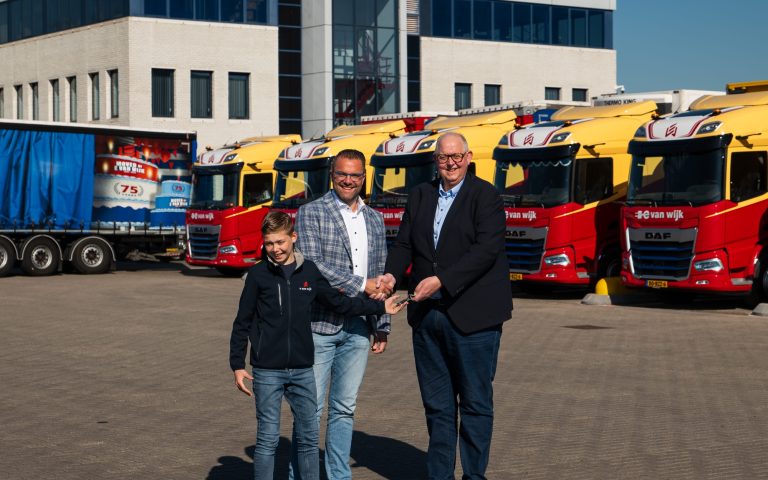
Giessen, 5 april 2025 – E. van Wijk Logistics heeft zes nieuwe DAF XD Electric trucks in ontvangst genomen. Deze volledig elektrische trekkers, met een actieradius tot 500 kilometer, worden momenteel getest in samenwerking met DAF Trucks. De levering volgt op een eerdere test met de DAF XF Electric, die al sinds vorig jaar in de praktijk wordt ingezet. Met deze uitbreiding groeit de elektrische vloot van E. van Wijk dit jaar naar in totaal twaalf voertuigen.

Germany: Europe’s Export Champion

Germany exports goods worth hundreds of billions of euros worldwide each year. In 2023, the total export value amounted to approximately €1.56 trillion. This makes Germany still the largest exporter in Europe. And the Netherlands? It firmly ranks in the top 3 of Germany’s most important export destinations.

For us as a logistics partner, this means switching daily between customer demand, delivery expectations at the destination, and the complexity of cross-border transport. At such volumes, every hour and every kilometer counts.

Germany’s Top 5 Export Products

German exports revolve around quality, technology, and reliability. Below are the five most important product categories we transport to and from Germany as a logistics partner:

Cars and Vehicles

Germany is Europe’s automotive production hub. Brands like Volkswagen, BMW, Audi, and Mercedes-Benz are global leaders. Not only complete cars leave the country, but also parts, drive systems, and electric modules. This sector accounts for more than 17% of German exports, or about €266 billion per year.

For E. van Wijk, this means: specialized transport, secured loads, and often just-in-time deliveries to factories or distribution centers at home and abroad.

Machinery and Industrial Equipment

With a market share of over 14% of export value, machinery is the second most important category. From machine tools to agricultural equipment. Germany supplies high-quality technology used worldwide.

We transport these machines as both full truck loads (FTL) and less-than-truck loads (LTL), with extra attention to stability, packaging, and unloading methods.

Electronic Equipment

Think of industrial measuring equipment, medical electronics, semiconductors, circuit boards, or communication systems. These are often high-value, sensitive products. In this category, accuracy in transport and handling is essential. We provide temperature control, shock protection, and real-time tracking where needed.

Pharmaceutical Products

The pharmaceutical sector (with major players such as Bayer and BioNTech) is rapidly growing. Exports of medicines, vaccines, and medical technology increase every year. In this sector, we often transport goods under strict conditions – from temperature control to express delivery within 24 hours.

For our customers, this means transport that is not only fast but also 100% reliable and compliant with regulations (GDP).

Chemical Products and Plastics

Basic chemicals, plastics, adhesives, resins, and lubricants – these products are essential for countless industries. Germany is a global player in this field, and the Netherlands is also a major customer. We provide safe, ADR-certified transport and match the right resources with the right cargo.

Germany and the Netherlands: Strong Logistics Partnership

The Netherlands is one of Germany’s most important trading partners. In 2023, the trade volume reached more than €205 billion. Not only cars and machinery, but also parts, semi-finished goods, and consumer products cross the border in large volumes every day. This requires smooth logistics.

As a logistics partner, we ensure a stable connection between German factories and Dutch customers – and vice versa. Thanks to our experience in cross-border transport, real-time tracking, and smart route planning, goods continue to flow efficiently.

How E. van Wijk Responds to Export Flows

At E. van Wijk Logistics, we align our services seamlessly with these German export streams. What we do:

  • Daily transport to and from Germany, focusing on full truck loads, groupage, and ADR transport

  • Distribution within the Benelux and Germany through our own network

  • Real-time monitoring, so you and your customers always know where your shipment is

  • System integrations, providing automatic status updates and reducing administrative tasks

This way, we connect production with end users – efficiently, reliably, and flexibly.

German Exports Remain Logistically Relevant

Germany’s exports have a major impact on the European and Dutch economies. The products Germany supplies are indispensable for industries such as manufacturing, healthcare, and technology. As a logistics provider, we continuously adapt to these dynamics.

Whether it concerns a high-tech machine, a pallet of medicines, or a full trailer of car parts: at E. van Wijk Logistics, we ensure your freight arrives. On time, safe, and worry-free.

Reliability, safety, and quality are indispensable in the pharmaceutical sector. Whether you transport vaccines, medicines, or other sensitive products, you want the assurance that they are handled according to the strictest standards. At E. van Wijk Logistics, we understand how important this is. With our GDP certificate (Good Distribution Practice), we guarantee that your products are transported safely and with the utmost care. In this article, discover what a GDP certificate entails, why it is essential for pharmaceutical transport, and how we can support you.

GDP transport

What is a GDP certificate?

When transporting medicines, vaccines, or other sensitive pharmaceutical products, you want absolute assurance that this is done safely and according to the highest standards. A GDP certificate – Good Distribution Practice – is the proof that a transport company meets strict requirements for storage and distribution within the pharmaceutical supply chain. It guarantees that products remain under controlled conditions throughout the entire logistics process, with careful attention to temperature, hygiene, and traceability. This ensures that the quality of your products is preserved.


The significance of a GDP certificate

A GDP certificate is more than just a quality mark; it is evidence that your products maintain their quality during transport and storage. The associated international guidelines ensure that your medicines are transported under optimal conditions. This includes strict control of temperature, hygiene, and traceability.


Why is a GDP certificate important for your transport?

Reliability is essential in the pharmaceutical sector. Even a small temperature deviation or incorrect storage method can reduce the effectiveness of medicines. By partnering with a GDP-certified transport company, such as E. van Wijk Logistics, you can be confident that your products are handled safely and according to the highest standards.


Requirements for obtaining a GDP certificate

What rules and standards apply for a GDP certificate?

A GDP certificate is not issued lightly. The transport company must comply with strict guidelines established by the European Union. These include:

  • Temperature control: Your products are transported within a specific temperature range to maintain quality.

  • Documentation: Every process is carefully recorded and monitored.

  • Training: Employees are trained to work according to GDP guidelines.


How does a transport company obtain a GDP certificate?

To obtain a GDP certificate, a transport company goes through several steps:

  • Process evaluation: Existing processes are reviewed for GDP compliance.

  • Implementation of improvements: Systems and procedures are adjusted to meet the requirements.

  • Audit: An independent auditor verifies that the company complies with all standards.

  • Certificate awarded: Upon approval, the GDP certificate is granted.


Why choose a GDP-certified transport company?

Assurance and trust
By choosing a GDP-certified transport company like E. van Wijk Logistics, you can be sure your products are in good hands. Our certificate guarantees that we meet the highest standards in pharmaceutical transport.

New opportunities for your business
With a GDP certificate, you gain access to markets and customers with strict supply chain requirements. By partnering with us, you can expand confidently while complying with the toughest regulations.


Frequently asked questions about GDP certification

What are the differences between GDP and other certificates?
GDP certification is specifically focused on the pharmaceutical sector. Other certificates, such as HACCP or ISO 9001, focus more on food safety or general quality management.

How often must a GDP certificate be renewed?
A GDP certificate is not valid indefinitely. Usually, a transport company must undergo a new audit every three years to maintain the certificate.

Do you want to ensure your pharmaceutical products are transported safely and according to the highest standards? Contact E. van Wijk Logistics. We are ready to take care of your needs and tailor your transport fully to the strict GDP requirements.

In the logistics world, terms like 2PL, 3PL, and 4PL are often mentioned, but everything starts at the basics: 1PL logistics. But what exactly is 1PL? And why does it remain relevant for companies that want to fully manage their logistics themselves?

1PL logistics (First Party Logistics) refers to companies that handle their entire logistics process in-house — from storage to transportation, everything is managed internally. For businesses seeking maximum control over their supply chain, 1PL offers compelling advantages. In this blog, we explain what 1PL entails, how it works in practice, and when this approach is the right fit.

E van Wijk vrachtwagen op weg

What does 1PL mean?

What is 1PL? The term 1PL stands for First Party Logistics. This means that a company is fully responsible for its entire logistics process without involving external service providers. The company owns or manages the warehouse, the transport vehicles (such as trucks or vans), and the personnel.

This approach is especially popular among organizations that highly value direct control, confidentiality, and internal process optimization.

What is the difference between 1PL and 2PL logistics?

In 2PL logistics, the transportation part is outsourced to an external carrier. The company remains the owner of the products and manages storage and order processing itself but contracts a transport company for deliveries, for example.

Aspect 1PL 2PL
Storage Managed in-house Managed in-house
Transport Managed in-house Outsourced to carrier
External partners None Only for transport
Control Fully internal Partial

Examples of 1PL in practice

1PL logistics means a company manages its logistics activities itself, from inventory management to delivery, without using external parties or logistics partners. This model is common among companies with small or local customer bases where logistics scale is limited and manageable.

Examples of 1PL activities include:

  • Own drivers and transport vehicles

  • Own warehouses or storage facilities

  • Own planning and order systems

How does 1PL work in practice?

A 1PL company manages the entire process from production to delivery internally. Imagine a local bakery that produces bread daily, stores it itself, and delivers it with its own vans to shops or customers in the region. Everything happens within the same organization.

Common sectors where 1PL is applied:

  • Agriculture: farmers delivering directly to buyers or markets

  • Retail: smaller chains with their own logistics

  • Manufacturing: factories delivering directly to the end customer

The role of 1PL within the logistics chain

The term First Party Logistics refers to the first level in the logistics chain. The producer or supplier manages the entire chain themselves. This requires strong 1PL management: internal systems, trained personnel, and insights into inventory, routes, and customer needs.

Difference between 1PL and other models (2PL, 3PL, 4PL)

As companies grow, they often outsource parts of their logistics. Here’s an overview:

Logistics model Who does the work? Example activity
1PL You Production, storage, transport
2PL External carrier Transport with hired driver
3PL External logistics partner Transport, storage, order handling
4PL Supply chain orchestrator Complete chain optimization

1PL management: keeping full control

With 1PL, the company has full control over every logistics step. This means:

  • Managing inventory internally

  • Planning routes themselves

  • Monitoring delivery reliability

Advantages:

  • Maximum control over quality and speed

  • Direct customer contact and feedback

  • Confidentiality of processes and products

Disadvantages:

  • Fewer economies of scale compared to 3PL/4PL

  • Requires investment in own infrastructure and personnel

1PL in the Netherlands

In the Netherlands, smaller companies or niche markets mostly choose 1PL logistics. While scaling often leads to outsourcing, there is still a clear place for 1PL in the Dutch market.

In sectors where quality, speed, and customer contact are essential, 1PL remains a smart choice. Examples include:

  • Artisan producers

  • Local delivery services

  • Companies with a limited geographic sales area

Sustainability also plays a role: some companies deliberately choose shorter chains and limit external logistics movements.

Want to learn more about logistics models like 2PL, 3PL, or 4PL?

Check out our full blog series to discover which solution suits your business best.

  • What is 2PL Logistics?

  • What is 3PL Logistics?

  • What is 4PL Logistics?

Request a quotation