


 Back to blogs
 What is a distribution center and how does it differ from a warehouse?

27 October 2025

Petar Micic
Many companies deal with storage and logistics, but the distinction between a distribution center and a warehouse isn’t always clear. In this blog, we explain what each term means, what warehousing involves, and how to make the right choice for your business.
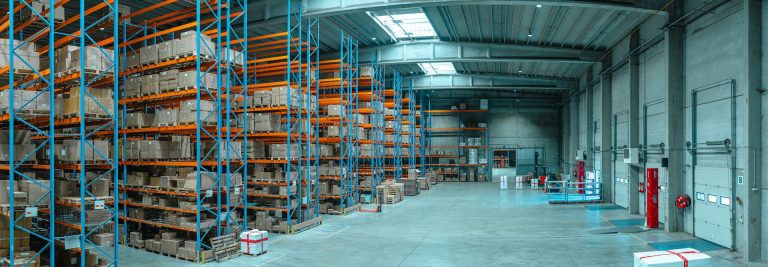
What is a distribution center?
Definition of a distribution center: A distribution center (DC) is a facility where products are received, stored, processed, and shipped to customers, retail stores, or other businesses. It is a hub for order fulfillment, packaging, and shipping, ensuring that goods move quickly through the supply chain.
Functions of a distribution center
A distribution center helps you with:
-
Receiving and storing incoming goods
-
Order picking and packaging
-
Timely shipping to customers or retail stores
-
Cross-docking, where goods are directly routed to their next destination
Examples of distribution centers
Online retailers such as Amazon or Bol.com use distribution centers to process thousands of orders per day. In the industrial sector, distribution centers also play a vital role in streamlining logistics.
What is a warehouse?
Definition of a warehouse: A warehouse is a storage facility where products are kept safely until they are needed. The focus is on inventory management rather than fast processing or shipping.
Differences between a warehouse and a distribution center
|
Feature |
Warehouse |
Distribution Center |
|
Storage |
Yes |
Yes |
|
Order Processing |
Often limited |
Core function |
|
Throughput Speed |
Lower |
High, focused on fast delivery |
|
Logistics Role |
Storage only |
Storage + processing + shipping + cross-docking |
A warehouse is suitable if your primary goal is to store products, whereas a distribution center is ideal when speed and processing are key.
What is warehousing?
Warehousing describes the process of storing, managing, and distributing goods. This includes all activities that take place within a warehouse or distribution center:
-
Storage of products
-
Inventory management
-
Order fulfillment
-
Transport preparation
-
Cross-docking for fast throughput (optional)
In short: a warehouse is the location, a distribution center is the location plus processing, and warehousing is everything you do within that space to ensure logistics run smoothly.
What is cross-docking?
Cross-docking is a logistics method where goods are transferred directly from inbound to outbound transport, without long-term storage. This typically takes place in a distribution center and provides:
-
Faster delivery to customers or retail stores
-
Reduced need for storage space
-
Lower logistics costs
Cross-docking works well for products with a high turnover rate or when fast delivery is critical.
Read also: Is cross-docking appropriate for your organization?
Distribution center or warehouse: which suits your organization best?
When choosing between a warehouse and a distribution center, several factors come into play:
-
How fast do you want your products to reach your customers?
-
How large is your inventory, and what is your turnover rate?
-
Do you want to use cross-docking for fast throughput?
If speed, processing, and fast throughput are important, a distribution center offers significant advantages. If your primary focus is product storage, a warehouse is often sufficient.
Frequently Asked Questions (FAQ)
What exactly does a distribution center do?
A distribution center receives, stores, processes, and ships products to customers or retail stores. Cross-docking can also take place here.
Is a warehouse the same as a distribution center?
No. A warehouse is primarily a storage facility, whereas a distribution center also handles order fulfillment, shipping, and cross-docking.
What is warehousing?
Warehousing is the process of storage, inventory management, order fulfillment, and transport preparation within a warehouse or distribution center.
What is cross-docking?
Cross-docking is the direct transfer of goods from inbound to outbound transport, without long-term storage.
Summary
While a distribution center and a warehouse overlap in terms of storage, their functions differ. A distribution center processes and ships goods and can utilize cross-docking, whereas a warehouse primarily provides a secure location for storage. Warehousing encompasses all activities related to storage, processing, and transport.
Do you have questions about which type of storage best suits your organization? At E. van Wijk Logistics, we are happy to advise you on solutions that combine speed, throughput, and efficiency.
