Sustainable transport solutions
Electric transport
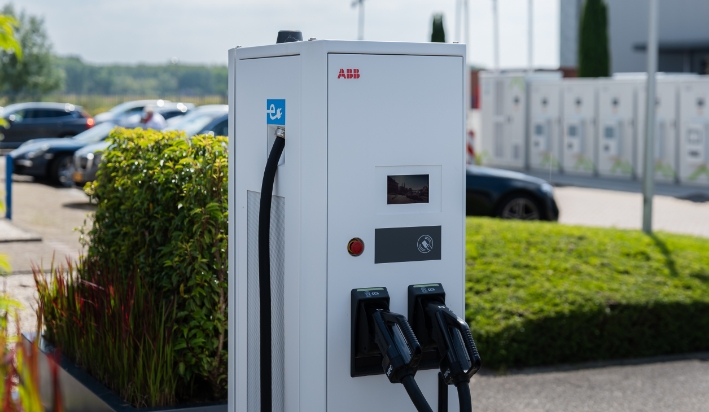
The sustainability ambition took concrete shape with the purchase of 10 electric vehicles. The vehicles will be used primarily for distribution in the Netherlands. The electric trucks are an important factor in the future-proof supply of zero-emission zones. The electric trucks will also be used for shuttle traffic between production and warehouse locations.
In 2024, E. van Wijk took an important step with the commissioning of our solar power system. Our solar park, consisting of 2,800 solar panels, generates 1,412 MWh of sustainable energy annually. With this, E. van Wijk largely provides for its own power needs, both for our premises and electric vehicles.
The power generated by E. van Wijk will be stored in a battery system. The battery of 4.3 MWh, in combination with the energy management system will store the sustainably generated energy and make it available for the electric trucks and other own consumption. The battery addresses a growing problem of grid congestion.
Sustainable fuels
At E. van Wijk, we are committed to a greener future by using renewable fuels.
For example, we use FAME (Fatty Acid Methyl Ester). For several years, E. van Wijk has added 7% of this fuel. By 2023 this share has been increased to 15%. This results in a Co2 reduction of 13%!
Another sustainable fuel that E. van Wijk uses frequently is HVO. This is biodiesel made from used plant oils. Use of HVO100 results in a CO2 reduction of up to 89%!
Our trucks run on these innovative fuels, further reducing our carbon footprint without sacrificing performance. By choosing FAME and HVO, we are taking an important step towards a sustainable and environmentally responsible logistics chain.
What is HVO diesel?
HVO is short for “Hydrotreated Vegetable Oil. HVO is produced from vegetable oils, waste, residual oils and fats (such as used cooking oil). HVO can be used in any diesel engine. This can be completely pure, (100% HVO use) but also in other proportions in combination with fossil diesel. For example, HVO50 consists of 50% HVO and 50% fossil diesel. HVO100 is HVO in its purest form, where no fossil diesel is added.